Thermal Performance: U-Values in Context
U-value (thermal transmittance) is the primary measure of how much heat a glazing material loses per square metre per degree of temperature difference. In a Polish winter, the outside temperature can sit at −20 °C while a frost-protection heating system maintains +5 °C inside. That 25-degree differential means even modest U-value differences translate into meaningful energy differences per square metre of glazing.
| Glazing Type | Approximate U-Value (W/m²K) | Light Transmission |
|---|---|---|
| Single glass (4 mm) | 5.6–5.8 | ~90% |
| Twin-wall polycarbonate (10 mm) | 3.0–3.5 | ~80% |
| Twin-wall polycarbonate (16 mm) | 2.0–2.5 | ~72% |
| Triple-wall polycarbonate (25 mm) | 1.3–1.6 | ~65% |
| Double glass with air gap (4-16-4) | 2.6–2.8 | ~80% |
| Double glass with argon gap | 1.0–1.3 | ~72% |
The figures above are typical manufacturer values. Actual site performance depends on frame quality, seal integrity and glazing bar design. Cold bridges at aluminium profiles can account for a significant fraction of total envelope heat loss in a professionally measured installation.
Snow Load Behaviour
EN 1991-1-3, implemented in Poland as PN-EN 1991-1-3, defines characteristic snow loads for each climate zone. In Mazury and Podlaskie (snow load zone III), the characteristic ground snow load is 1.2–1.5 kN/m². On a greenhouse roof pitched at 20°, the load that reaches the glazing is reduced by shape coefficient but can still reach 0.8–1.0 kN/m² in a design event.
Glass Behaviour Under Snow
Tempered glass (hartowane szkło) is significantly stronger than standard float glass. A 4 mm tempered pane in a well-supported greenhouse bay can handle substantial point loads without cracking. However, glass is brittle: a localised impact from a falling ice chunk dislodged from the gutter can cause sudden failure even within rated load limits. When glass breaks under snow load, the failure is immediate and the opening left is large.
Laminated safety glass (szkło laminowane) adds a plastic interlayer that holds shards in place after breakage. It is heavier and more expensive but is commonly specified for the roof panels of commercial structures to reduce the risk of sudden glazing collapse.
Polycarbonate Behaviour Under Snow
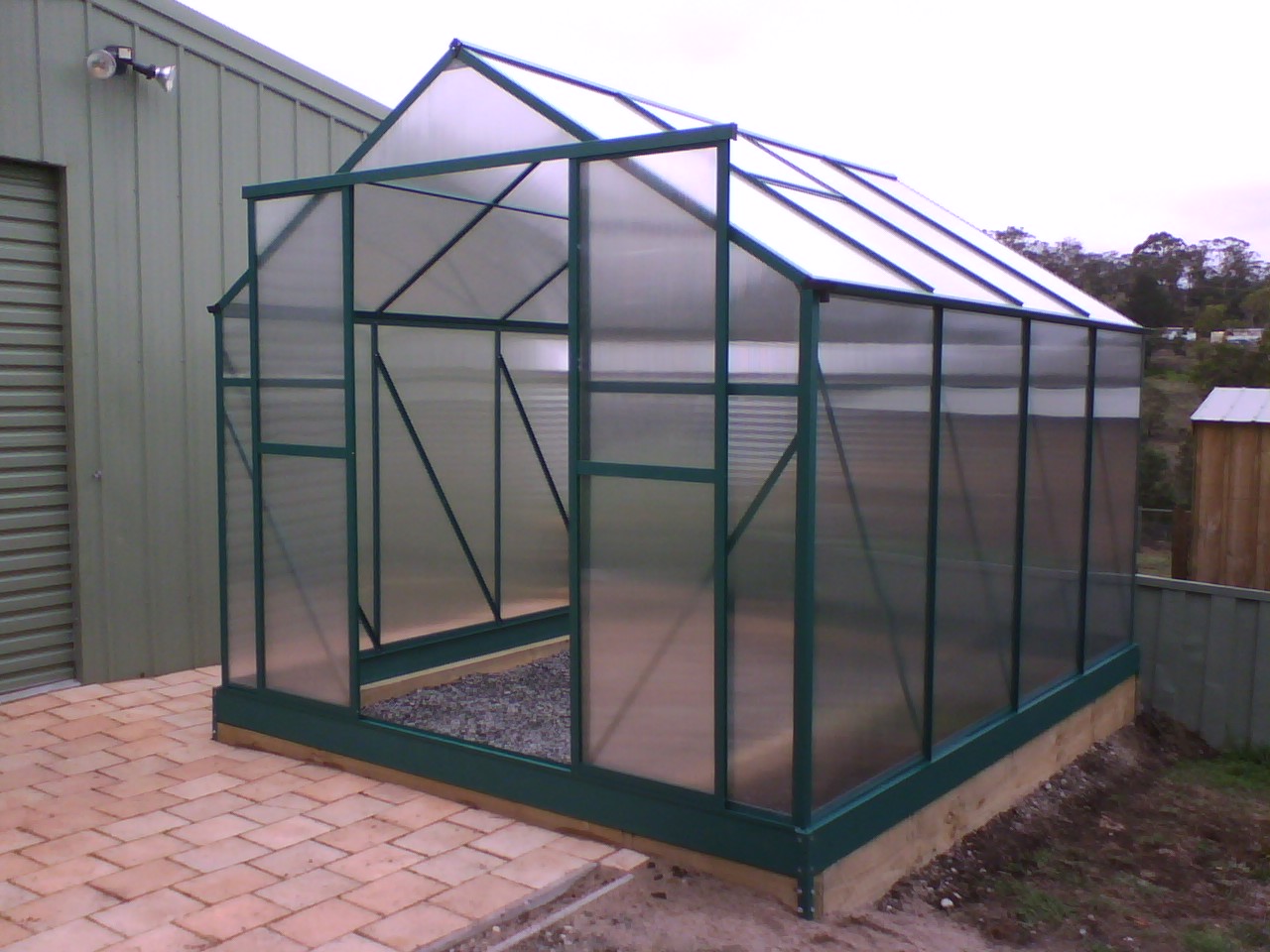
Polycarbonate panels are flexible and absorb impact rather than shattering. Under snow load, a polycarbonate roof will deflect more visibly than glass without failing. This flexibility is also a drawback: the deformation changes the slope and can trap standing water or ice at low points, creating persistent freeze-thaw stress on the gasket seals.
Installation note: Polycarbonate panels must be installed with the UV-protected face outward and the channels running vertically to allow condensate drainage. Horizontal installation causes moisture accumulation inside the panel channels and accelerates yellowing.
Condensation Management
In any greenhouse, warm humid interior air meets a cold glazing surface. The temperature at which condensation forms depends on both the interior humidity and the glazing surface temperature. With a 10 mm twin-wall polycarbonate panel and an outside temperature of −15 °C, the interior surface of the panel can drop to −5 °C or lower in an unheated structure. Condensation then forms ice crystals inside the channel structure of the polycarbonate, which gradually degrades the panel’s translucency.
Glass has no internal channel structure and condensation runs off the smooth surface more cleanly, though it can still accumulate in glazing bar channels. For crops sensitive to drip — lettuces, strawberries, cut flowers — a condensation drainage channel in the glazing bar profile is a practical requirement regardless of material choice.
Weight and Structural Implications
A 4 mm tempered glass pane weighs approximately 10 kg/m². A 16 mm twin-wall polycarbonate panel weighs around 2.8 kg/m². For a 100 m² greenhouse roof, this difference in dead load is approximately 720 kg. On a lightweight galvanised steel Venlo-type frame, the reduced dead load from polycarbonate allows the use of lighter rafters and purlin sections, which reduces the overall cost of the frame but also reduces its stiffness.
Degradation Over Time
Glass does not degrade optically under UV exposure. A glass greenhouse built in Poland 30 years ago will have the same light transmission as it did when installed, assuming the glass surface has been kept clean. Polycarbonate, even with UV stabiliser coatings, yellows gradually. Manufacturers typically quote a usable life of 10–15 years for standard panels before light transmission drops noticeably. High-quality panels with co-extruded UV protection may perform for 20 years or longer in moderate conditions.
Practical Summary
For year-round heated commercial production in northern Poland, double or triple-wall polycarbonate at 16–25 mm remains the most common choice because of its thermal performance and lighter structural requirements. For unheated or cold-stored structures where light quality matters more than insulation, or for structures where longevity without replacement is a priority, tempered or laminated glass at an appropriate panel size is the more durable option.
The two material types can also be combined: glass panels for the lower side walls where high light transmission is needed and polycarbonate for the roof where thermal performance and impact resistance are more important.